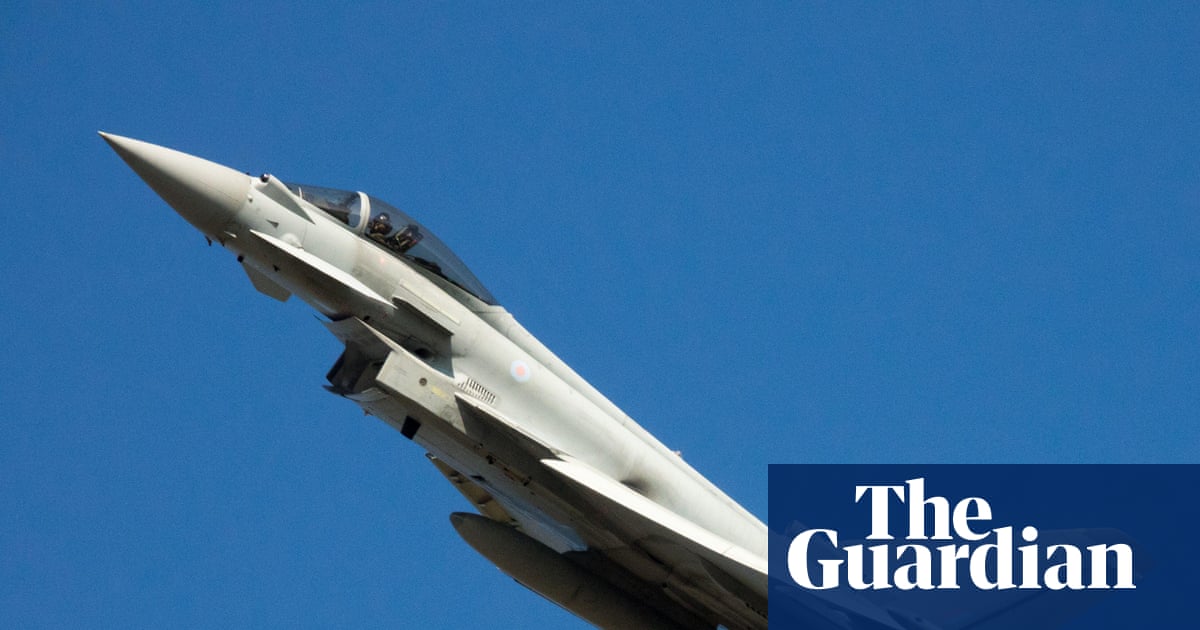
The Royal Air Force is preparing for a future in which human crews direct networks of autonomous aircraft, Air Chief Marshal Harv Smyth said in a London lecture on Monday. He described a concept in which each Typhoon fighter would operate alongside four armed, artificial-intelligence-enabled drones able to patrol hundreds of miles from the crewed aircraft.
Smyth said faster machine-led warfare would move RAF personnel away from directly controlling every action and toward supervising operations, setting limits and controlling the systems’ broader activity. He presented the approach as a modern counterpart to the Second World War emphasis on “steel, not flesh”, when aircraft and tanks were used to reduce reliance on infantry in exposed positions.
The proposed force structure is linked to Britain’s requirement to be ready, with its allies, for a possible war with Russia by 2030. Smyth said the drones could act as a force multiplier by carrying sensors, weapons and other capabilities into contested airspace. One scenario would place a Typhoon over Scotland while its associated drones tracked Russian aircraft approaching the Greenland-Ireland-UK air corridor in the North Atlantic.
Its StormShroud system, described as the first in a family of Autonomous Collaborative Platforms, has completed testing with RAF units, including multiple-aircraft cooperation exercises. The system is designed to disrupt enemy radar and air-defence networks while supporting crewed aircraft such as Typhoon and the F-35B Lightning.
Smyth pointed to Ukraine as evidence that autonomous systems are changing combat. Russian and Ukrainian forces have used artificial intelligence to identify and attack targets when satellite or radio links are unavailable during the final part of a mission, while Ukrainian drones have repeatedly reached targets inside Russia, including oil infrastructure. Ukrainian investigators also concluded that a drone involved in a death near a Zaporizhzhia gas station in July had relied on artificial intelligence.
The plan would also address RAF staffing pressures. Fully trained personnel numbers have fallen from 29,800 in 2020 to 27,850, although the total has begun recovering over the past 18 months. Smyth said the shift toward autonomy could expand the RAF’s reach without requiring a matching increase in crews, while the first tests of the four-drone arrangement are expected next year and service entry is targeted for the end of the decade.