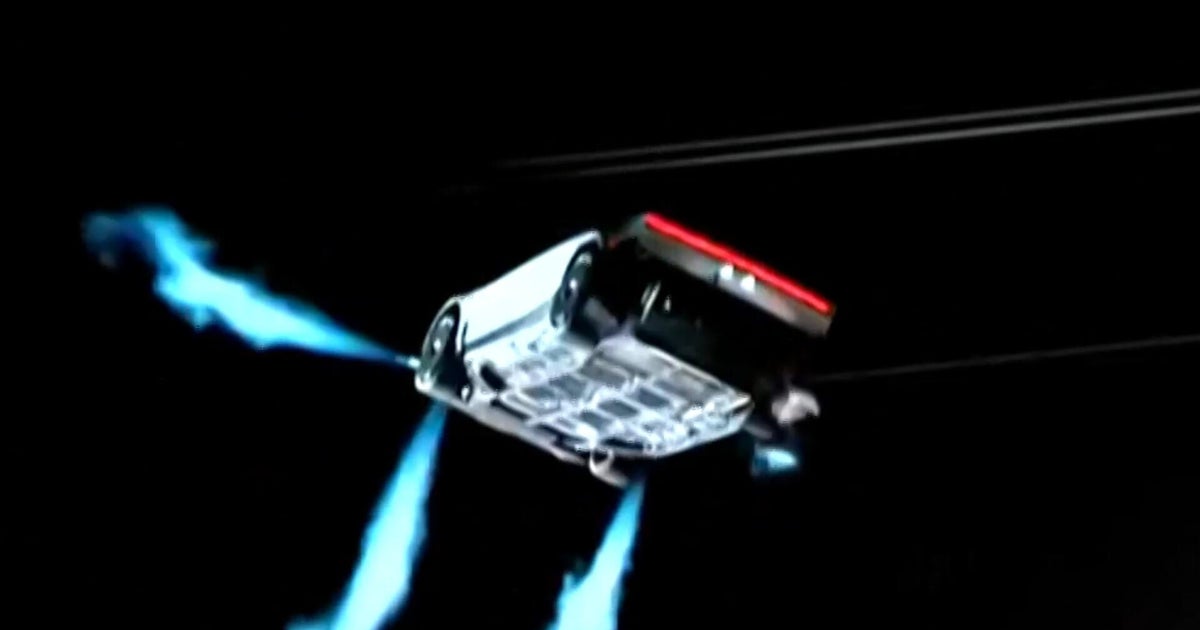
Tesla unveiled a second-generation Roadster at SpaceX’s rocket-testing facility in McGregor, Texas, demonstrating a prototype that can briefly leave the ground, spin in midair and land under its own thrust. The presentation included a steep-ramp climb, an upside-down hold enabled by a fan-based suction system, and a barrel roll over a line of Tesla vehicles.
The Roadster combines the suction system with 10 cold-gas thrusters supplied by compressed air. Tesla engineering vice president Lars Moravy said the system stores about 600 liters, or roughly 550 pounds, of air in pressure vessels integrated into the vehicle. The company also demonstrated a claimed zero-to-60-mph time of less than one second.
No person drove during the airborne demonstrations. A mannequin in a SpaceX-style spacesuit occupied the driver’s seat, while Elon Musk said the event’s car was operated autonomously for safety. Musk described the vehicle as a future manually driven Tesla, although the demonstrated flying configuration is not approved for public roads.
The reveal follows years of delays. Tesla first announced the new Roadster in 2017 with deliveries initially expected in 2020, and Musk later promised an optional SpaceX technology package. Musk now says consumer production is targeted for 2028, but Tesla has not announced a final price or guaranteed deliveries. The company is offering reservations for road-focused and track-oriented versions, while the rocket-equipped version is invite-only; regulatory approval remains a separate requirement for any version intended for ordinary road use.