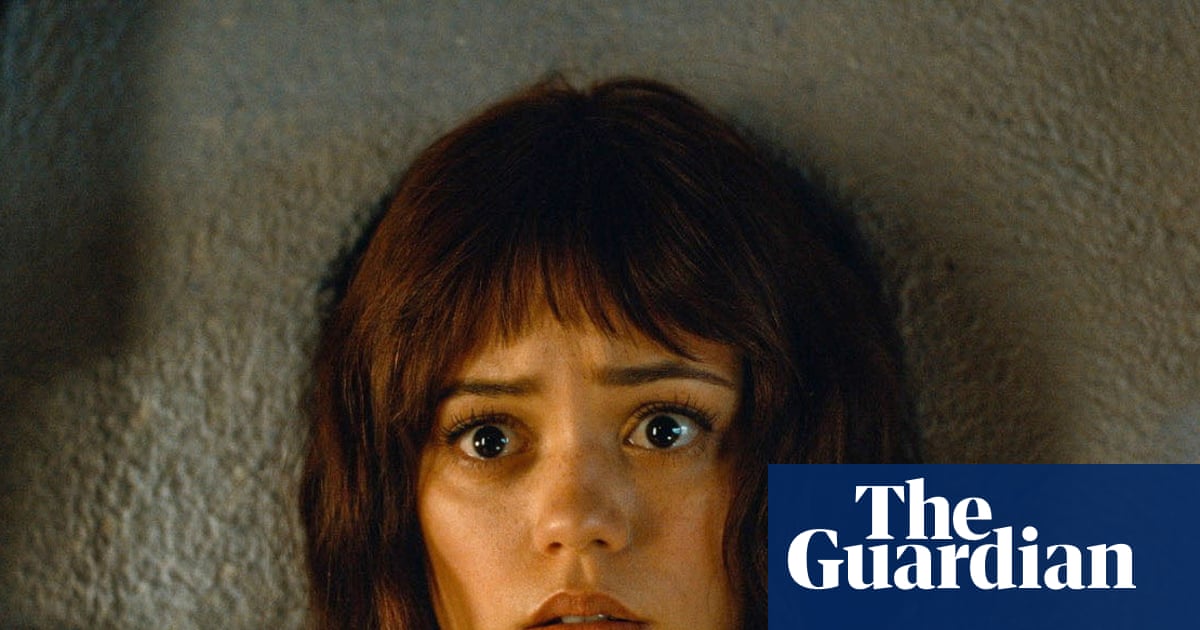
Jenna Ortega plays Klara, a discontinued artificial companion chosen by Josie, a sick 14-year-old portrayed by Mia Tharia. Josie lives with her mother, played by Amy Adams, in a strained family environment marked by grief and loss. Klara’s purpose is simple: to provide friendship and support, even as she struggles to interpret the human world around her.
Waititi adds comic misreadings, physical mishaps and sharper tonal shifts, including a sequence in which Klara steers the family car off the road and a fear that she may be returned to a factory and dismantled. The result moves between warmth and unease rather than remaining within the novel’s restrained mood. Waititi has said that his instinct is to push scenes toward comedy before drawing them back toward emotion, while Ishiguro has argued that an adaptation should use its own imagination instead of reproducing a book too literally.
Their shared subject is not limited to artificial intelligence. Waititi has described the film as being interested in loneliness, while Ishiguro has framed that loneliness as something more fundamental than ordinary isolation: a condition tied to the limits of understanding and the fact that some experiences, especially death, must ultimately be faced alone. In the film’s world, Klara is an “artificial friend, ” while other robots function as bereavement dolls that substitute for deceased spouses, siblings or children. Waititi joked that he could imagine choosing a more agreeable replacement for one of his own children, turning the film’s unsettling premise into a comic observation about attachment and human adaptability.
The production is directed by Waititi and written by Waititi and Dahvi Waller. Its principal cast also includes Aran Murphy, Steve Buscemi and Natasha Lyonne, with David Heyman, Garrett Basch and Waititi among the producers and Ishiguro among the executive producers.
The story has also drawn attention because Ishiguro’s novel has been discussed in technology circles as a possible ethical reference point for developing artificial intelligence. Ishiguro has resisted treating the book or film as a practical guide to AI policy, saying its central concerns are human rather than technical. Waititi similarly imagines a darker alternative in which Klara becomes a “murder-bot, ” but the finished film keeps her tied to friendship, loyalty and the fragile effort to care for someone in an unstable world.