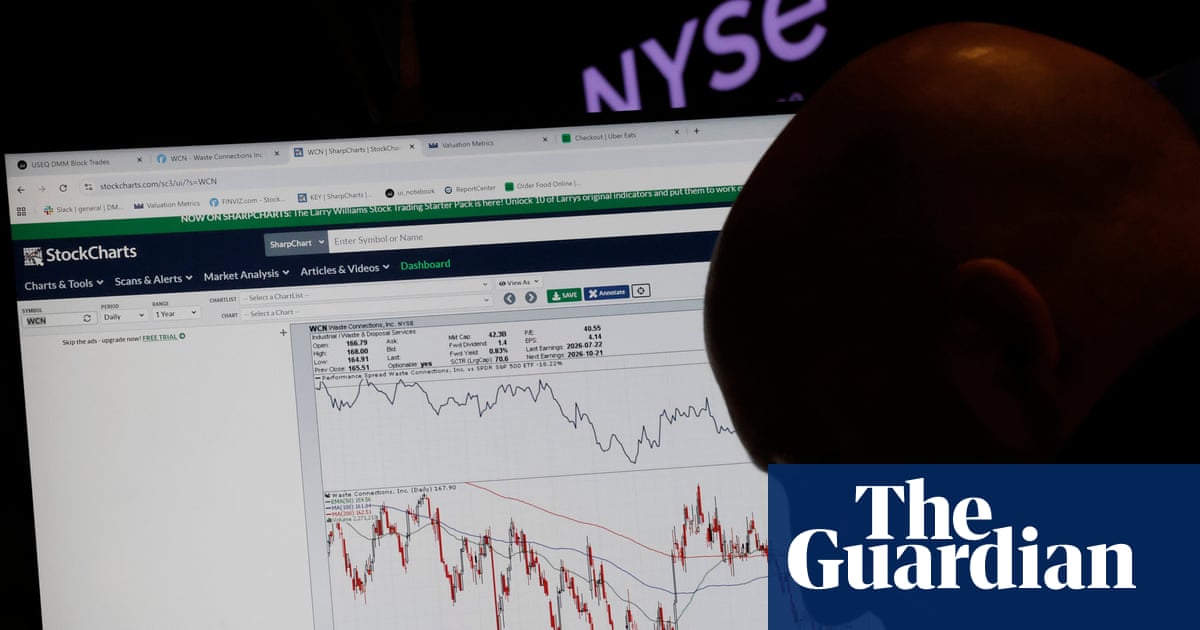
A sharp sell-off in technology stocks has intensified doubts about whether the artificial-intelligence investment boom can deliver the returns built into current valuations. The Nasdaq 100 fell 5. 5% last week, while the Nasdaq composite suffered its worst weekly decline since June before recovering 1. 1% on Monday.
The warning sign in Australia was Firmus Technologies’ decision to withdraw what had been expected to become one of the country’s largest sharemarket listings.
The proposed float was also notable because Nvidia owns a 7. 2% stake in Firmus. The company says it has seven AI factories across Australia, Singapore, Indonesia and Malaysia, with two operating and five under development.
The broader market remains far above its earlier levels. The Nasdaq 100 is nearly three times its value at the beginning of 2023, while Alphabet, Amazon, Apple, Meta, Microsoft, Nvidia and Tesla now represent 35% of the S&P 500, compared with 12% a decade ago. The combined market value of those seven companies has risen by more than 50% in two years.
Debt has become a central part of the debate.
The IMF’s October outlook lists a reassessment of AI expectations among the downside risks to the global economy. Its financial-stability analysis also identifies circular financing, in which companies help fund infrastructure that then purchases their products, as a channel that could amplify losses if demand weakens. It said the balance sheets of major hyperscalers remain strong and that financial-stability risks are currently contained, while warning that future spending and faster hardware obsolescence could create pressure over time.
Australia is exposed to the construction cycle but is unlikely to be at the centre of any global reversal. Commonwealth Bank economists estimate that data-centre investment in Australia could reach A$150bn by 2030 and A$260bn by the middle of the 2030s. Even so, the latest market moves have not established that the AI boom is ending: they show investors testing valuations, financing structures and the evidence that projected demand will become durable earnings.