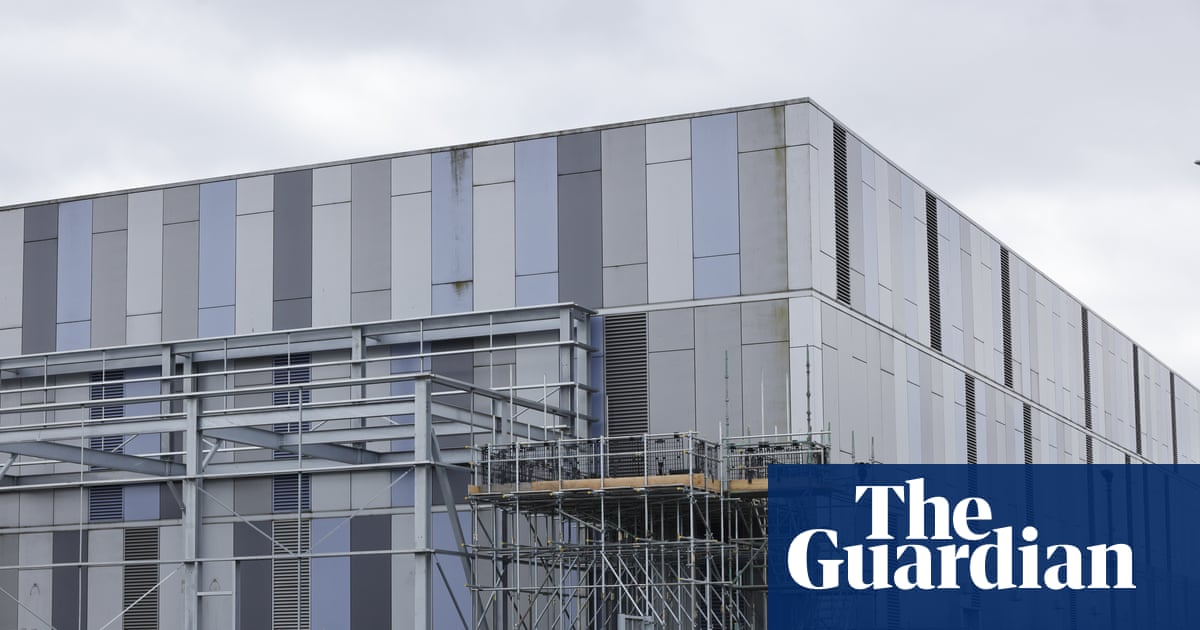
DataVita has revised the power plan for its proposed AI datacentre campus at Chapelhall, near Airdrie, saying the facilities will be fully served by the National Grid. The company had previously described a scheme in which more than 1GW of wind, solar and battery capacity would be connected directly to the datacentres through private wires.
The earlier 1GW figure was presented as enough to support a 500MW datacentre development and was compared with the output of a small nuclear reactor or Britain’s largest windfarm. DataVita now says the grid electricity used by the site will be largely renewable and that nearby solar and windfarms could be connected later. It also says its grid supply will be backed by a renewable power-purchase agreement, a contractual arrangement that does not create a direct physical connection to a particular generator.
The change affects a project designated as North Lanarkshire’s AI Growth Zone. Government plans announced in January described a campus delivered by DataVita with CoreWeave, supporting more than 3,400 jobs, attracting £8. 2bn in private investment and drawing on-site renewable energy to power up to 500MW of compute. Separate financing announced for the existing DV1 expansion and new DV3 facility includes a £202m National Wealth Fund guarantee supporting a debt facility of about £300m.
The revised plan comes as planning and connection issues remain unresolved for further expansion. North Lanarkshire Council later confirmed that the proposal would require a full environmental impact assessment because of a Scottish government directive covering datacentre applications above 50MW.
Action to Protect Rural Scotland said the change illustrated exaggerated claims by datacentre developers and argued that hyperscale AI facilities require dependable grid power. Its planning objections also identified the grid connection as an issue requiring more information. The immediate consequence is that the development’s publicly stated renewable commitment now concerns the source or contractual matching of grid electricity, while any direct connection to proposed local wind and solar generation remains a possible future step rather than the current supply arrangement.