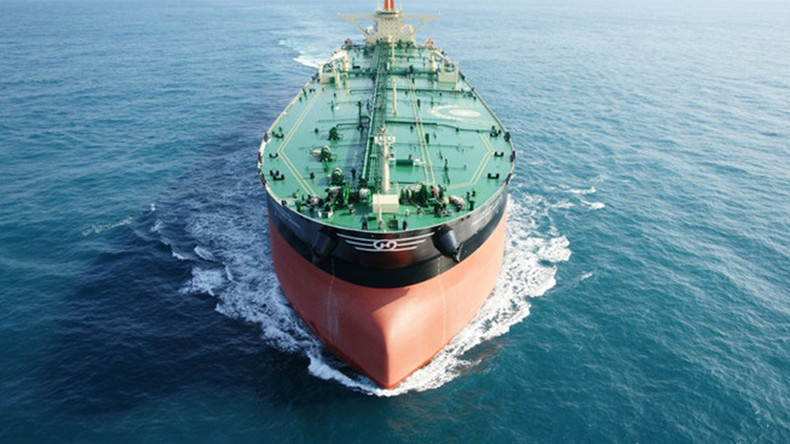
The disruption around the Strait of Hormuz has tightened the global crude-tanker market and sharply weakened the economics of shipping oil from the U.S. Very large crude carriers, or VLCCs, are being drawn into lengthy shuttle operations that move Middle Eastern oil through ship-to-ship transfers in the Gulf of Oman, leaving fewer vessels available for Atlantic Basin routes.
The Gulf of Oman shuttle fleet has grown to about 80 VLCCs, but each vessel is spending an average of 23 days on a round voyage. That is more than twice the 9-to-10-day cycle considered efficient for a Basrah-to-Sohar trip. Transfers are also shifting toward western India and Malaysia because capacity near Oman is constrained, adding roughly four days to some voyages and further reducing the fleet’s productivity.
The result is a freight shock on routes that do not pass through Hormuz. Middle East-to-China VLCC freight has reached $24 per barrel in one recent assessment, while rates for cargoes loaded outside the Strait in the Gulf of Oman reached $12 per barrel. The competition for ships has forced Atlantic Basin charterers to bid more aggressively, transmitting the regional risk premium to the U.S. Gulf Coast-to-Asia trade.
Valero executive Randy Hawkins said on the refiner’s earnings call that moving a VLCC from the U.S. Gulf Coast to Asia was averaging about $30 to $35 per barrel, compared with roughly $5 per barrel in 2025. The effect is not an outright halt in global shipments: escorted shuttle operations continue, and an estimated 6 million barrels per day or more has been moving through the alternative Hormuz route, about 40% or more of prewar flows.
The workarounds remain slow and expensive. Routing oil toward Asia through the Suez Canal rather than the Red Sea can add as much as a month, while shuttle tankers may wait at least a day and a half in the Gulf of Oman for transfers. Spot charter rates for Hormuz transits reached about $1 million per day on Sept. 11, compared with normal rates of roughly $30,000 to $50,000. Kpler’s market assessment said freight could level off unless the conflict escalates again, but it also noted that refinery margins will determine how long buyers can absorb the elevated delivered cost.