Its Ethereum smart contracts will remain active, so the shutdown applies to the public interface rather than the underlying on-chain protocol.
Borrowers using Blend must repay their loans by the deadline or allow them to default. Blur said it will provide a separate tool afterward for users to withdraw assets, while BLUR tokenholders will retain control of the protocol’s fee switch, which can determine whether trading fees are introduced.
The closure follows a steep decline in activity. The marketplace charged no transaction fees, and records cited in the reporting show zero protocol revenue over the previous three years; that figure does not establish whether Blend or other activities generated income.
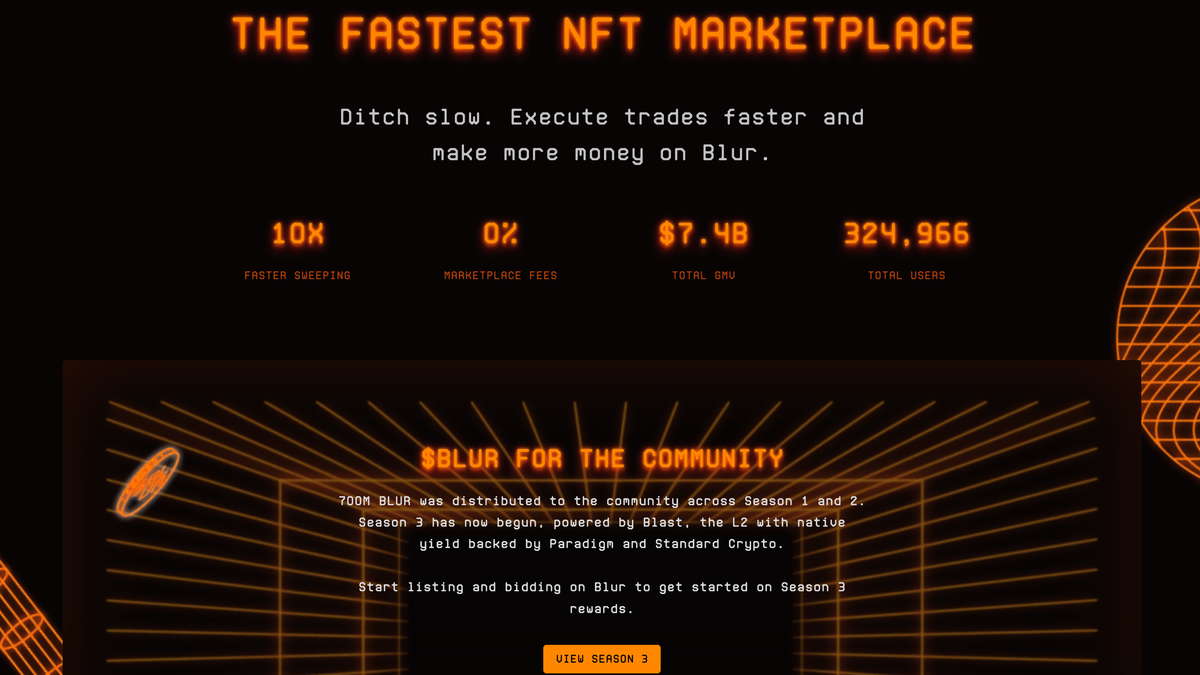
Blur launched in 2022 with faster transactions, low fees and token incentives aimed at professional traders, quickly overtaking OpenSea in trading volume. Its website continues to advertise zero marketplace fees and more than $7. 4 billion in lifetime volume, even as the broader NFT market has contracted sharply.
The decision came 10 days after Blast, an Ethereum scaling network created by Tieshun Roquerre and developed by the same team, announced its own shutdown. Blast had attracted more than $2 billion in assets at its peak, but developers said its operating costs exceeded revenue; users have until Oct. 26 to withdraw through the network’s regular interface.
BLUR fell more than 20% after the marketplace announcement, trading at about $0. The trading totals do not show how much activity came from end buyers rather than participants pursuing rewards, and Blur has not publicly attributed its shutdown to operating losses.