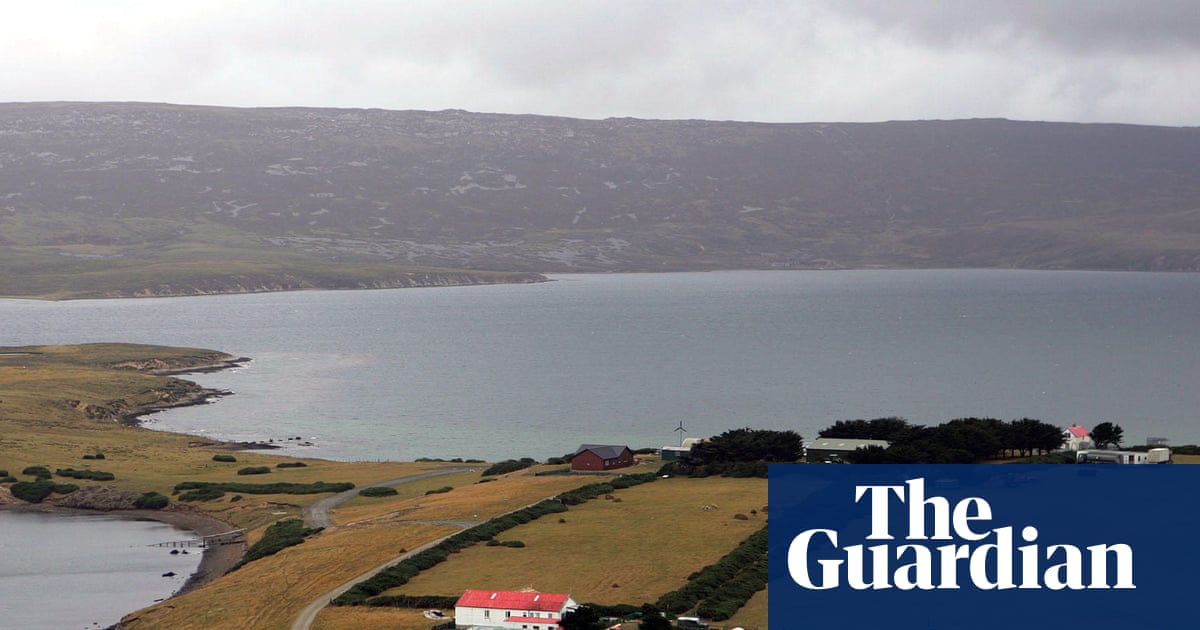
Argentina’s foreign minister, Pablo Quirno, announced during a speech at a thinktank event in Buenos Aires that his government would prevent the Falkland Islands from exploiting its offshore oilfields as part of a broader strategy to assert sovereignty. The speech, which included the British ambassador, David Cairns, highlighted Argentina’s frustration with the UK for not engaging in negotiations over the disputed territory and for advancing a major oil project in the area. Quirno emphasized that halting the exploitation was a step toward reclaiming full sovereignty through peaceful means. The UN has not officially recognized either country’s claim, stating the dispute must be resolved through bilateral talks. The Falkland Islands, home to about 3,600 people, are currently a British overseas territory, with a 2013 referendum showing overwhelming support for maintaining that status. Quirno also warned against third parties aiding the islands in resource exploitation, signaling a broader effort to limit external influence. A new shipping link between Chile and the Falkland Islands is set to open by year’s end, adding to the complexity of the region’s political and economic dynamics.
The 74-day war between Argentina and the UK in 1982 ended with Argentina’s surrender, resulting in significant casualties on both sides. The conflict remains a sensitive issue, with Argentina’s government continuing to push for sovereignty while the UK maintains its claim. Quirno’s remarks come as the UN urges continued peaceful negotiations, underscoring the ongoing nature of the dispute. The Falkland Islands’ status as a British territory is legally protected, but Argentina’s actions suggest a growing determination to challenge that status through nonviolent measures.
The dispute has broader implications for international relations, particularly in how sovereignty and resource management are handled in contested areas. While the UN remains neutral, both Argentina and the UK have taken firm stances, with Argentina’s government framing its actions as a necessary step in asserting its rights. The Falkland Islands’ residents, who overwhelmingly support British sovereignty, are not directly involved in the current diplomatic efforts, which focus on the broader geopolitical struggle. The issue remains a flashpoint in international diplomacy, with the potential for further escalation if negotiations fail to produce a resolution.