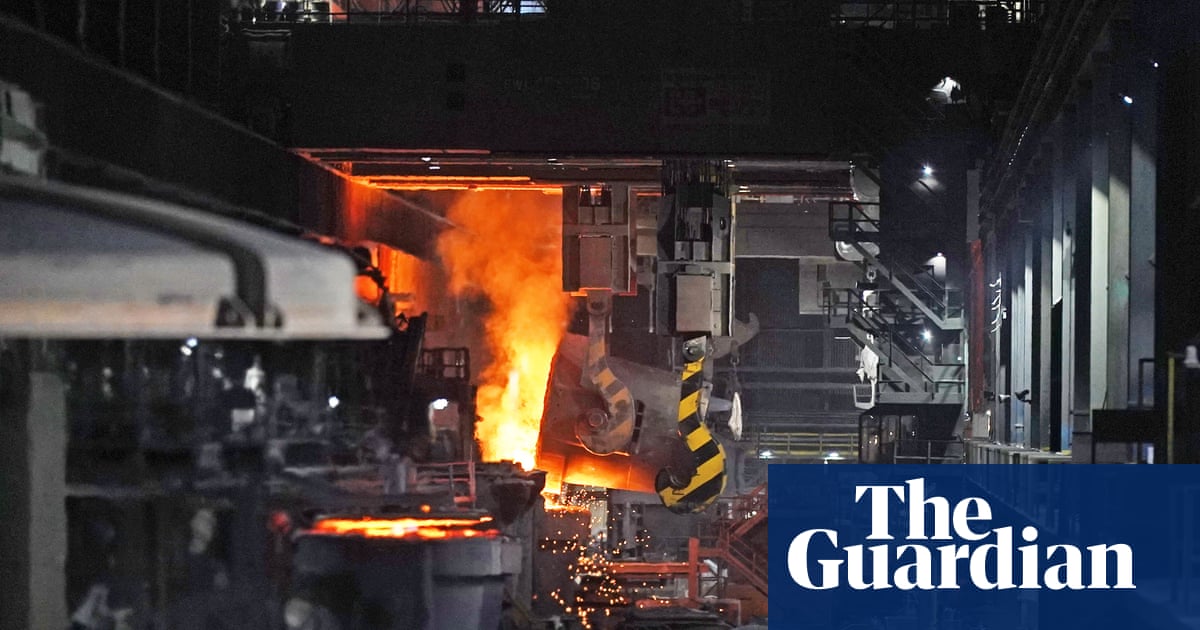
British steelmakers are paying nearly £30 more per megawatt-hour for electricity than French rivals, widening the gap to its highest level in three years as the conflict involving Iran drives up global gas prices.
The increase reflects the UK’s heavier reliance on gas-fired power generation. Under the current electricity market, wholesale gas prices can set the price of power generated from cheaper sources such as wind and solar. France relies more heavily on nuclear generation, while coal remains a larger part of Germany’s electricity mix.
The cost disadvantage is especially significant because the European Union is the destination for about 75% of Britain’s exported steel, worth roughly £3bn. The UK-France gap had narrowed to £18 per MWh last year, while the difference with Germany fell slightly to about £12 this year. Both remain well below the 2022 peak of £153 per MWh, recorded during the gas-market crisis after Russia’s invasion of Ukraine.
UK Steel estimates that British producers will pay £91 per MWh in 2026-27, compared with £61 in France and £79 in Germany, after available relief schemes are included. It calculates that the gap with France alone will add £66m to UK steelmakers’ costs in that financial year.
The group has proposed a two-way price-rebalancing mechanism. Under the plan, the government would compensate energy-intensive producers when British wholesale prices exceeded a European benchmark, while the industry would repay money when UK prices fell below it. UK Steel estimates the scheme would cost £51m a year from 2026 to 2030 and could produce an average net return of £13m annually from 2031 to 2035.
The government has already increased network-charge compensation for about 500 energy-intensive businesses, including steel producers, from 60% to 90%. Its British Industrial Competitiveness Scheme is due to cut electricity bills by up to 25% for more than 10,000 manufacturers from April 2027, with support worth around £35 to £40 per MWh and a projected annual cost of up to £600m. Steel producers are among the eligible industries, and payments will cover support that would have applied from April 2026.
UK Steel argues that further direct intervention is needed because the transition toward more electricity-intensive, lower-carbon steelmaking leaves producers exposed to the UK’s gas-linked power prices.