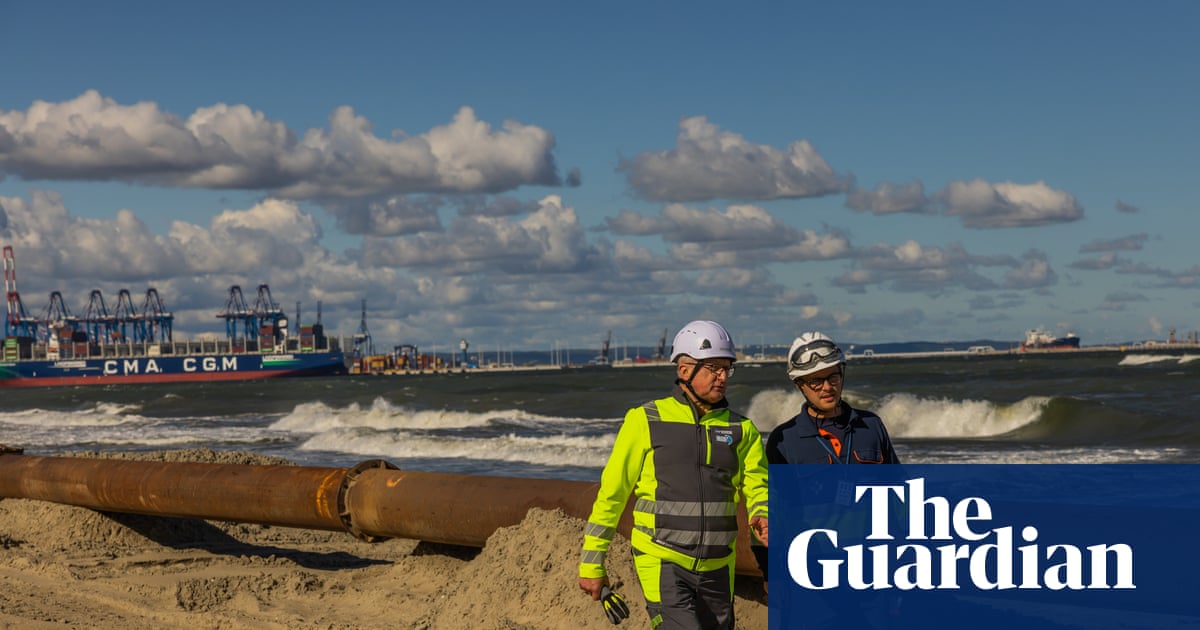
Two miles off the coast of Gdańsk, the white steel piles of Poland’s first offshore gas terminal rise from the slate-grey Baltic. Installed at a height eight metres above the waves, the floating cranes and construction vessels here are on the frontline of Europe’s push for energy security. Since the taps were turned off on Russian gas after Vladimir Putin’s invasion of Ukraine four years ago, Poland has turned to the global energy market for supplies. But while conditions are far from ideal as the Middle East war drives oil and gas prices to stratospheric levels, strengthening the diversity of the country’s energy mix remains a top priority for Poland, its Baltic neighbours, and the EU at large.
Looking out to sea from the windswept beach backed by pine forest, Maciej Wawrzkowicz, the offshore project manager at the national gas company Gaz-System, and the construction manager Krzysztof Polatynski say the Baltic is not an easy place to build. Before work could start, Polish navy minesweepers were called in to torpedo unexploded mines and bombs from the second world war. Construction is halted by storms, while the sea froze over last winter. But speed is important in this project of international significance.
However, there is also plenty of evidence in Gdańsk highlighting the energy challenges Poland must still confront. On the edges of the old town’s narrow cobbled streets, the red and white-banded chimney stacks of a Soviet-era coal-fired power plant belch out thick plumes of smoke. Tourist boats ferrying visitors to the Westerplatte peninsula – where the first shots of the second world war were fired – must also pass through the jet-black mountains of a coal dock. Coal accounts for more.